
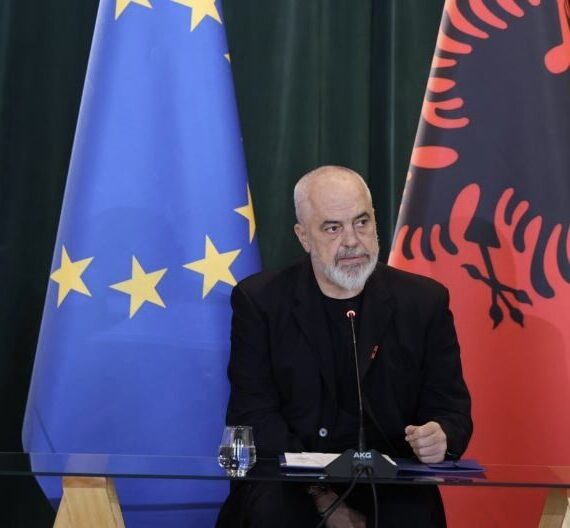
Prime Minister Edi Rama praised the role of the Centralized Purchasing Operator (CPO), describing it as one of the key instruments of reform in public procurement and in separating ministries from tendering processes. In his remarks, Rama emphasized that the creation and operation of the CPO has brought about a “major leap forward” in the way public purchasing procedures are carried out in the country.
“In terms of savings, the Centralized Purchasing Operator has played a special role,” Rama said.
According to the Prime Minister, ministries and ministers no longer have direct involvement with tenders, while a significant portion of procurement procedures is being gradually transferred to the Centralized Purchasing Operator. He underlined that this process aims to create a specialized structure with dedicated expertise for managing complex public procurement procedures.
“The Centralized Purchasing Operator has given us the opportunity to make another major leap forward so that we no longer conduct tenders within ministries,” Rama stated, adding that the process is also gradually expanding to agencies and local government through dialogue and cooperation with local authorities.
The Prime Minister stressed that local government has its own autonomy and that the government cannot impose how tenders are conducted. However, according to him, a cooperative model is being developed to increase efficiency, professionalism, and the standardization of procurement procedures.
In his assessment, Rama stated that public procurement processes are far more complex than they are often perceived in public debate, and that establishing a “highly specialized” structure such as the OBP is essential for ensuring quality and transparency in the use of public funds.
The Centralized Purchasing Operator is one of the structures the government has promoted in recent years as part of reforms aimed at centralizing procurement procedures, standardizing technical specifications, and reducing costs for public institutions. According to data previously published by the institution itself, the OBP has carried out more than 1,000 procurement procedures for dozens of institutions, reporting savings of more than €40 million for the state budget over two years of operation.