
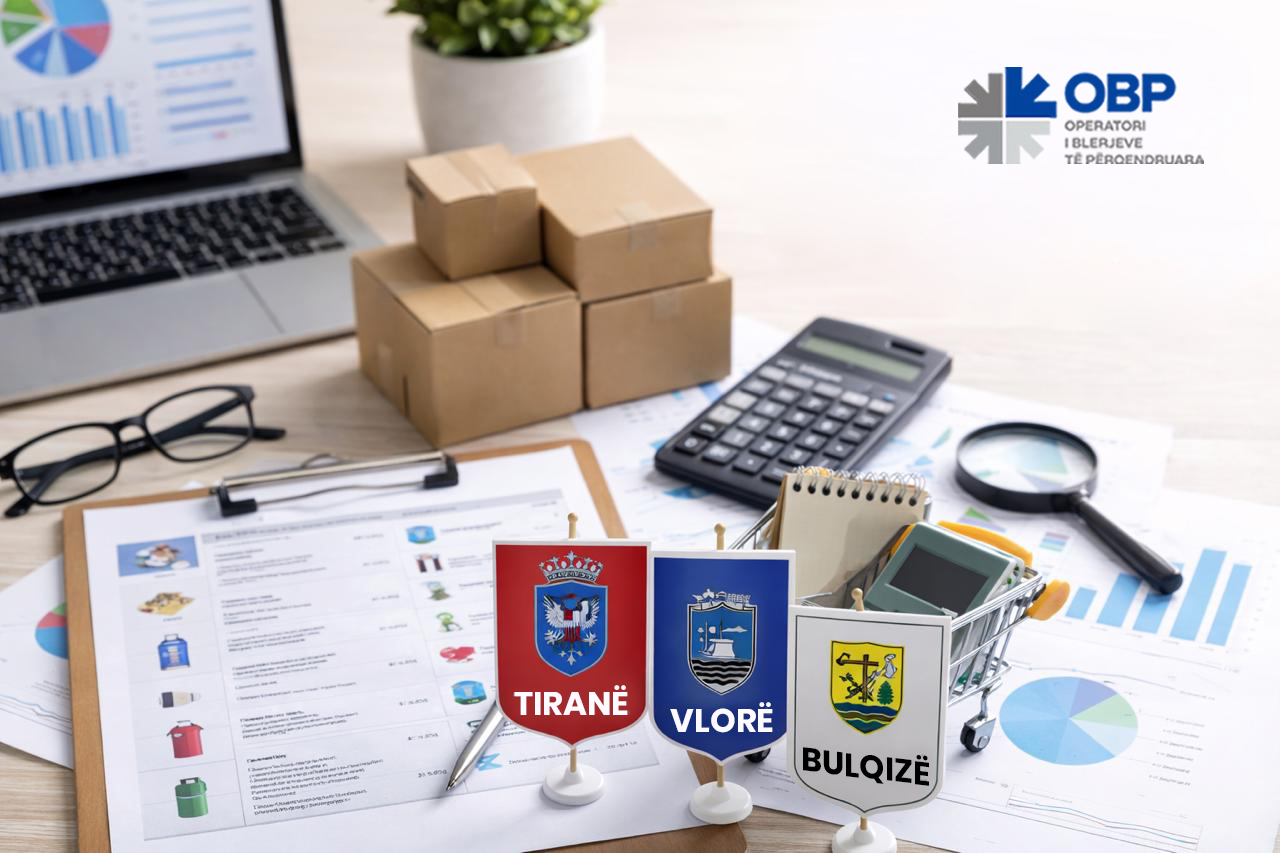
The catalogs prepared by the Centralized Purchasing Operator (CPO) are increasingly being used by local government units, reflecting a unified approach to preparing public procurement procedures.
Reference to the CPO catalogs has been included this month in official documents of institutions such as the Municipality of Tirana, Municipality of Vlora, and Municipality of Bulqizë, in procedures related to the supply of food items and cleaning materials for public institutions, including kindergartens and preschools.
In these procedures, institutions have relied on the standard formulation: “Based on the CPO catalogs and manuals,” using the technical specifications and indicative budget structures prepared by the CPO.
The CPO Administrator, Ms. Arlinda Pogaj, states, “The use of catalogs by municipalities is creating a common basis for drafting procurement procedures. Through this standardization, not only is time and resources saved for contracting authorities, but the quality of procurement is also increased, as the catalogs are built on detailed analyses and market consultations and are periodically updated to reflect real developments.”
The use of these catalogs aims to reduce the time required to prepare tender documentation, avoiding the need to draft technical specifications and budget analyses from scratch. Contracting authorities can rely on standardized and verified models, speeding up the launch of procedures and saving human and administrative resources.
At the same time, the use of catalogs contributes to improving the quality of public procurement through the standardization of technical requirements. The preparation of CPO catalogs is not an immediate process but is developed over several weeks, involving detailed analyses and consultation phases with market economic operators. This process ensures that technical specifications are clear, implementable, and aligned with market realities.
Furthermore, the catalogs undergo a continuous updating process, usually every six months or annually, to reflect changes in contracting authorities’ requirements and market developments. This approach helps maintain their relevance and accuracy over time.
The expanded use of CPO catalogs contributes to the unification of technical requirements and the creation of a more consistent approach nationwide, as well as increased transparency and fairness for economic operators participating in procurement procedures.
The CPO considers that this development is expected to further expand to other local units, supporting improvements in efficiency and the management of public funds.